




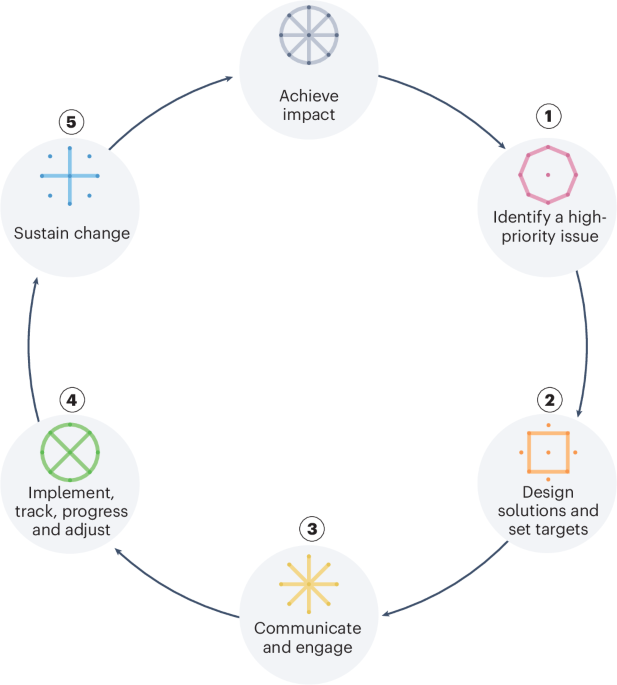
The DFI methodology accelerates progress through leveraging and learning from existing solutions that can be scaled and applied in other settings, rather than reinventing the wheel. For example, evidence has demonstrated that ensuring institutional capacity, intersectoral coordination and standardized management routines and monitoring and evaluation processes is essential to advancing implementation of NCD interventions14. For this reason, the WHO DFI directly draws from experiences of successful implementation of programs such as the WHO’s HEARTS (Healthy lifestyle, Evidence-based treatment protocol, Access to medicines and technologies, Risk-based approach, Team-based care, System for monitoring) program15. HEARTS is a comprehensive technical package developed to strengthen the management of CVD in primary care and is one of five packages that constitute the Global Hearts Initiative for the prevention and management of cardiovascular conditions.
The HEARTS in the Americas initiative16, for example, developed strategies that could be adapted to country-specific contexts, facilitating implementation and catalyzing changes within health systems. A phased approach to implementation allowed countries to start small and gradually scale up. As one of four founder countries, Cuba introduced HEARTS at a single demonstration site in 2016, with incremental expansion to three community primary care facilities in 2018 and then to 22 sites by 2021. By January 2023, the standardized HEARTS hypertension control program was expanded nationally to all 451 primary care polyclinics in Cuba, along with establishment of a national database for hypertension with over 2 million people with hypertension (roughly two thirds of the affected population) registered17.
The India Hypertension Control Initiative also used the WHO HEARTS technical package to effectively scale hypertension control, starting with a handful of districts in 2018 and expanding to 155 districts in 27 states, with 5.8 million patients with hypertension enrolled by June 2023. Relatively early in the implementation phase, availability of medicines was identified as a major challenge that deterred patients from returning to the clinics. WHO consultants worked with the Ministry of Health and Family Welfare to facilitate specific forecasting tools to determine medicine requirements, as well as strengthening procurement protocols and supply chains to improve equitable service delivery. As a result of this initiative, over 70% of the healthcare facilities had at least 1 month’s stock of anti-hypertensive medicines in stock by 2020 (ref. 17).
In early 2023, the DFI and NCD departments at the WHO identified so-called delivery milestones to support achieving measurable impact on NCDs at the country level. Using disease burden of hypertension and political willingness to implement the HEARTS package as criteria, Bangladesh, India, Nepal, Philippines, Sri Lanka, Vietnam and countries in the Americas region were identified as candidates for the following hypertension milestone: to accelerate HEARTS implementation to treat hypertension, increasing the number of people receiving treatment by 50% by the end of 2023. The program was reviewed quarterly, which provided opportunities for colleagues from all three levels of the WHO (country, regional and headquarters), as well as staff from Resolve to Save Lives, to reflect on the latest data and to identify challenges during implementation (such as gaps in using standardized clinical protocols, and insufficient supplies), and to plan the collection of longitudinal data. This delivery milestone was not only achieved but also exceeded, from a baseline of only 7 million patients receiving treatment in the participating countries to 17 million patients confirmed as receiving treatment by October 2023. At the end of the first quarter of 2024, more than 20 million patients were reported as receiving treatment, which demonstrates that the WHO DFI acceleration platform can be highly effective across several countries in different regions.
link



More Stories
Global Health Updates: US & WHO News
What $50 Billion for U.S. Foreign Affairs Changes for Global Health
SNAP Benefits in 2026: What Older Adults Should Expect From Work Requirements