


What are the symptoms of the new Nimbus COVID-19 variant?
Chin-Hong confirmed that no surprising wild card symptoms have yet been reported for NB.1.8.1 — they’re the same COVID-19 symptoms you’re used to hearing about from previous variants.
That said, the one symptom that doctors are hearing about from patients is the very painful throat that’s earned the unfortunate nickname “razor blade throat.” Or as Reddit commenters have described it, “like being burned by acid whenever I ate or drank something” and “like my throat was coated in broken glass.”
Why is Nimbus, a descendant of the omicron variant that first emerged in 2021, causing such sore throats? “I think omicron in general prioritizes the upper respiratory tract instead of the getting into the lungs as much,” Chin-Hong said.
One 2022 study from the United Kingdom found that a higher proportion of patients — up to 70% of those studied — reported sore throats when infected with the omicron variant compared with earlier variants.
As with previous variants to reach the Bay Area, Chin-Hong noted that more people also now appear to experience non-respiratory symptoms like diarrhea, nausea and vomiting when they get COVID-19 — gastrointestinal symptoms that folks can often initially dismiss as being unrelated to the virus.
According to the CDC, this is the full list of the possible symptoms of COVID-19:
- Fever or chills
- Cough
- Shortness of breath or difficulty breathing
- Fatigue
- Muscle or body aches
- Headache
- New loss of taste or smell
- Sore throat
- Congestion or runny nose
- Nausea or vomiting
- Diarrhea.
Remember, you might have a combination of these symptoms or just one. They might be mild or feel more severe. But if you’re experiencing any of these, take a COVID-19 test (more on this below).
OK, so how can I soothe my ‘razor blade throat’ if I’m infected?
For this kind of severe sore throat, it might be tempting to focus on topical medicine for your throat itself. But in general, systemic therapies — treatments which enter through your bloodstream, like Advil, and affect your whole body — “are better than topical ones,” Chin-Hong said. His recommendations:
Ibuprofen and acetaminophen
Ibuprofen (like Advil) is better than acetaminophen (like Tylenol) in this case, he said, although you should check with your health provider if you have other medical conditions which might make taking ibuprofen. If your throat hurts too much to swallow a pill, you can consider liquid versions of these drugs, but make sure you use the right dose depending on age, Chin-Hong said. And if you’re using a combination cold remedy like Nyquil, be aware it might already contain ibuprofen or acetaminophen — and be careful not to accidentally double-dose.
Topic remedies
You could try warm remedies like chicken soup, broth, lemon tea, honey or cold ones like popsicles, ice cream or ice chips. The upside of these treatments is the immediate relief they can bring, but they might also not last as long. You could also try gargling salt water, “which may loosen mucus” Chin-Hong said, or sucking lozenges with menthol or a mild anesthetic like benzocaine.
Environmental treatments to try
Chin-Hong also recommends:
- Stay hydrated
- Get your rest
- Don’t smoke or expose yourself to smoke
- Consider a humidifier, as dryness may make your symptoms worse.
And you should consider seeking medical attention if your symptoms last longer than a week, if your sore throat is very severe, and if you begin drooling or become unable to eat or drink, Chin-Hong said.
What are the current COVID-19 cases in the Bay Area right now?
Actual “COVID cases” — that is, positive test results — are not tracked in the way they once were by local and state public health bodies. In the absence of widespread up-to-date data on positive test results, watching for the presence of the coronavirus in human sewage has become increasingly important for gauging the levels of COVID-19 spread in a particular area. This is because if you have COVID-19, the virus will show up in your feces soon after you’re infected.
While COVID-19 levels in the Bay Area’s wastewater have been slowly increasing since late spring, there’s “no statistically significant trend upwards at the moment,” said Bidwell from WastewaterSCAN. The Bay Area’s wastewater sites that Stanford monitors are currently in the “medium” category, she said, and “concentrations are on average lower where they were this time last year,” when the Bay Area experienced a summer surge.
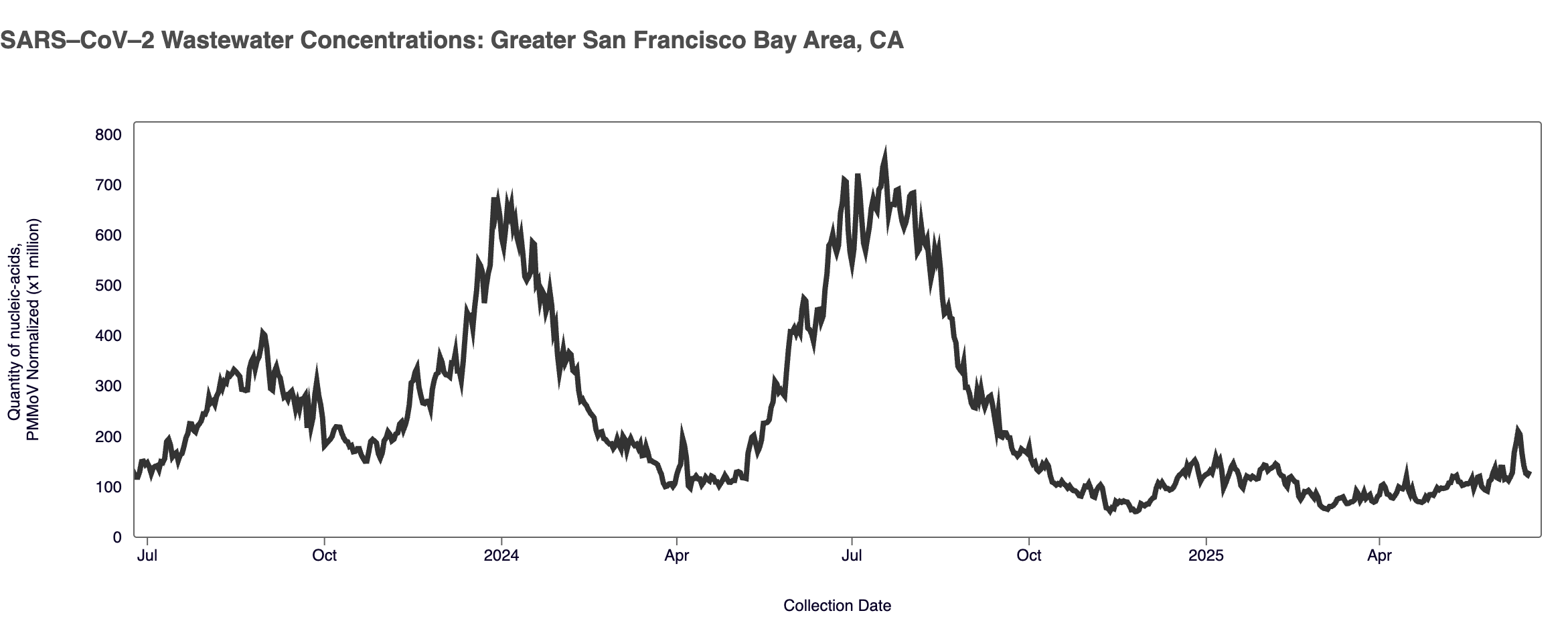
You can check the COVID-19 levels in your own county’s wastewater according to WastewaterSCAN’s monitoring:
San Francisco | Alameda | San Mateo | Santa Clara | Contra Costa | Solano | Marin | Sonoma | Napa
Is the latest COVID-19 vaccine still effective against the new variant?
Yes: The COVID-19 vaccine that rolled out in August 2024 is effective against the NB.1.8.1 variant, Chin-Hong said. “It’s a descendant of JN.1, which all the last year’s vaccines were based on, which we still have around.”
If you didn’t get your COVID-19 shot in the fall, Chin-Hong has a message: Go get one now, particularly if you plan to travel abroad this summer. Not only will your protection last roughly a year, he said, “getting it now if it’s being paid for would help that person navigate through what we might see in the summer, but also later on in the year if rules change” — referring to the widespread uncertainty about how President Donald Trump’s administration might further change the U.S.’s vaccine policies.
Currently, the CDC recommends the COVID-19 vaccine for most adults 18 and older, which means that most health insurance companies should cover the costs for people with insurance.
I think I was exposed or have symptoms. When should I take a COVID-19 test?
Step 1: Know about updated incubation times for NB.1.8.1
If you’ve heard that incubation times for the virus are getting shorter — that is, the amount of time between getting exposed to COVID-19 and testing positive — it’s true. People are testing positive more quickly than they were in 2020, when the average incubation period was five to seven days, because it has changed with each new variant, Chin-Hong said.
Three days is a common period of time between exposure and getting sick, Chin-Hong said, and given this trend, it makes sense to take a COVID-19 test as early as two days after exposure if you’re already having symptoms.
Step 2: Don’t trust a negative early COVID-19 test
If your first test is negative, you should absolutely test again the next day if symptoms persist — and again after that if you’re still negative.
Here’s why you can’t necessarily trust a negative at-home COVID-19 test in 2025: While incubation times have gotten shorter, doctors are seeing people take longer to get a positive test, Chin-Hong said, and that’s probably more to do with how much quicker someone with COVID-19 might develop symptoms in 2025 than they would have done in 2020.
As a reminder, those symptoms are the sign that your body’s immune system is mounting a response to an invading virus. Back at the start of the pandemic, by the time you developed COVID-19 symptoms and took a test, it would probably already be positive.
But at this stage of the pandemic, “we likely have more immune cells circulating that can recognize the enemy, so it ‘sounds the alarm’ quicker [and] people might feel something faster than in the old days,” Chin-Hong said.
Dr. Abraar Karan, an infectious disease physician and researcher at Stanford University, also put it this way for NPR in 2024: “With our immune systems primed, the body’s response 1751371891 comes much more quickly than it would have back in 2020 when SARS-CoV-2 was a novel pathogen.”
And because many of us take a COVID-19 test when we start to feel sick, we might actually be testing way too early for an at-home antigen kit to successfully detect enough virus inside us.
The bottom line: If you’re testing because you’ve started feeling unwell, don’t assume a negative result means you don’t actually have COVID-19. Play it safe, stay home as much as you can and wear a well-fitted mask if you can’t. Take another antigen test 48 hours later, Chin-Hong said. You can also seek out a PCR test, which is more sensitive.
Step 3: Make sure your COVID-19 test hasn’t expired
Those COVID-19 tests you might have in a drawer may be approaching their expiration date if they haven’t already passed it. And an expired test could give you an unreliable result.
You can check the FDA’s list of antigen test types to see whether the box you’re holding has had its shelf life extended by the manufacturer. The FDA said that if a test’s shelf life has been extended, it’s because the manufacturer has given the agency enough “data showing that the shelf-life is longer than was known when the test was first authorized.” (In other words, it’s still OK to use that test.)
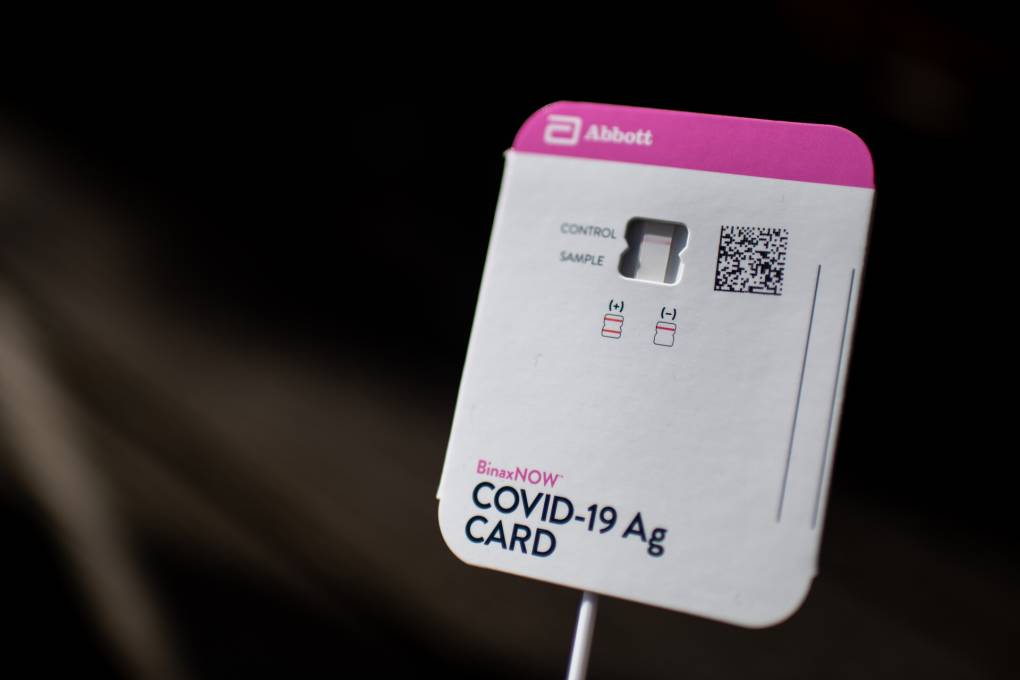
Another tip from Chin-Hong: “A quick and dirty way” to know if you’re using a functional COVID-19 test is to make sure the control line turns positive. If that doesn’t happen, “that means the test is probably not working,” he warned.
Where can I still find a free COVID-19 test?
Good question.
Finding a quick, free COVID-19 test — whether an at-home antigen test or a PCR test — has gotten progressively harder at this stage of the pandemic as more sites and services have been shuttered.
And visiting the White House site that once offered you free at-home COVID-tests through USPS will now greet you with an image of Trump superimposed over the headline “LAB LEAK: The True Origins of COVID-19,” as well as a page dedicated to the theory disputed by many scientists that the pandemic was caused by the coronavirus leaking from a government laboratory in Wuhan, China.
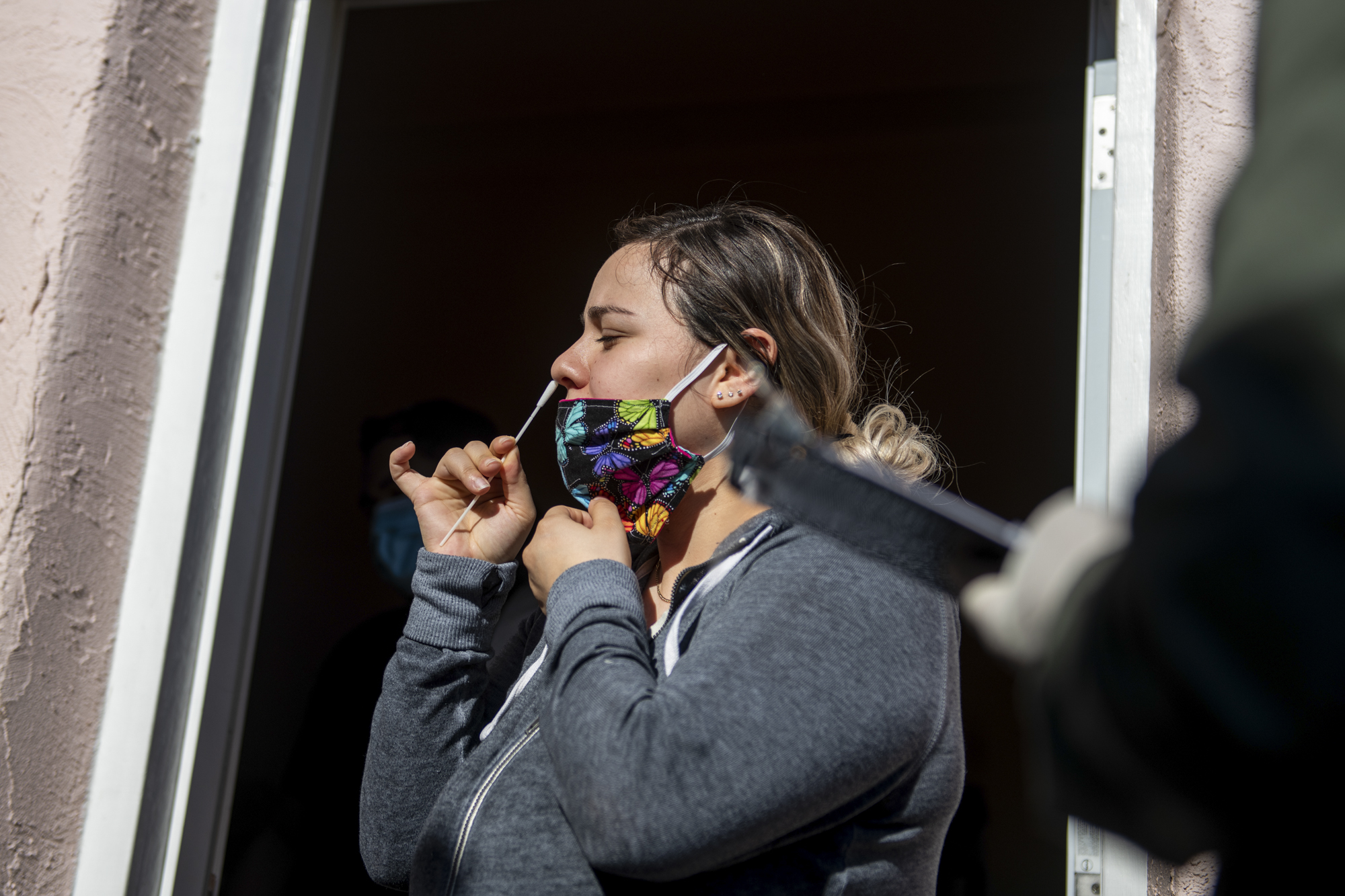
So, what do you do now if you don’t already have a supply of antigen tests for COVID-19 at home right now? Try the following:
Purchase a COVID-19 at-home antigen test at a pharmacy near you
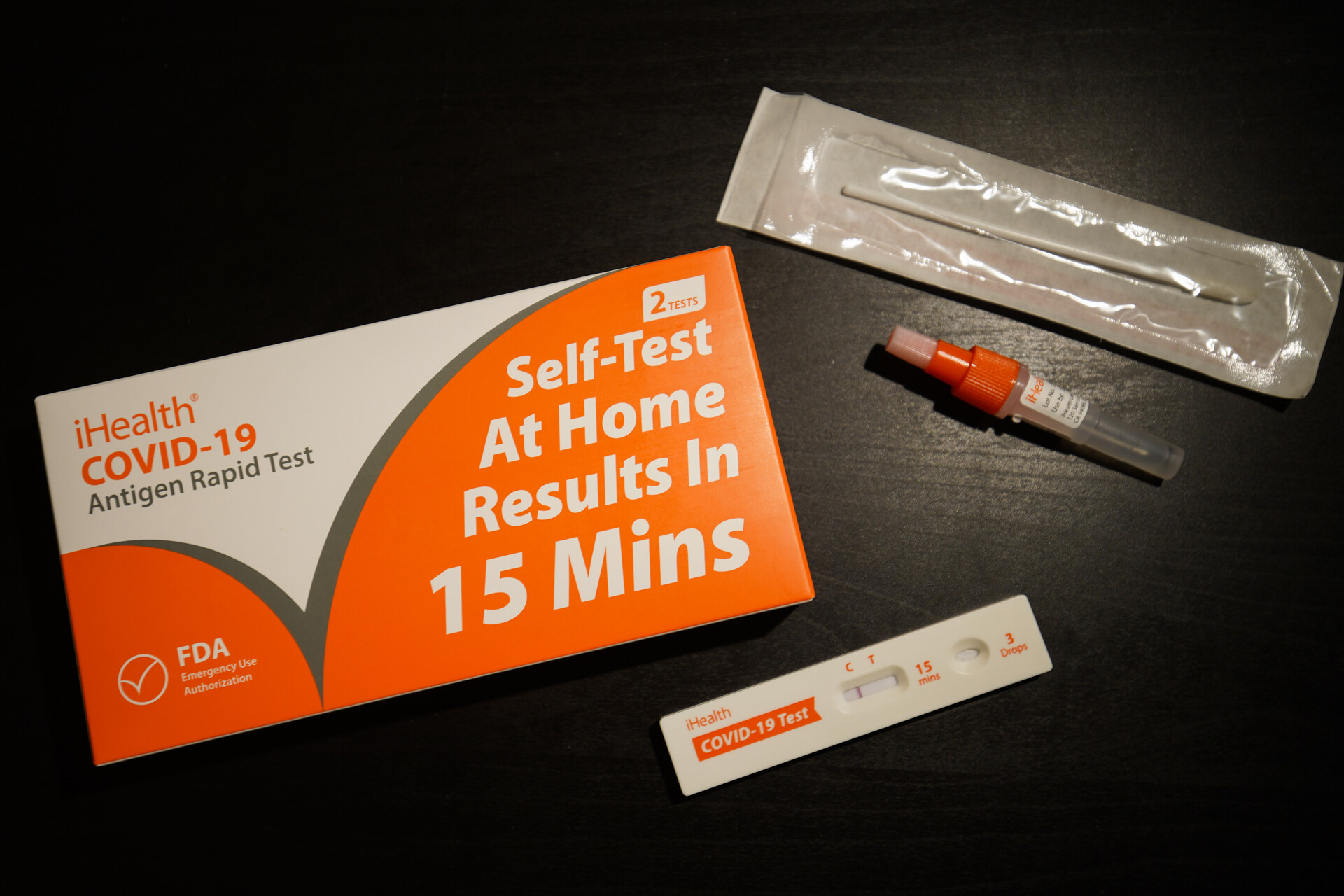
The quickest option will also be one of the most expensive up-front: Purchasing an at-home antigen test at a nearby pharmacy. (Ideally, ask someone to purchase one for you so you don’t potentially expose other people at the pharmacy, and if you really have to go yourself, wear a well-fitted N95 mask to help lower the risk you pose to others.) These at-home test kits are usually around $20 for a pack of two.
If you have health insurance, you can request reimbursement from your health insurer for the cost of up to eight at-home tests per month, so don’t throw away your receipts.
Find a COVID-19 PCR testing site near you
PCR testing is more accurate than an antigen test. It’s more sensitive at picking up traces of the coronavirus in your body, but it may take longer to get your results than with an at-home test.
Currently, there are still some sites offering free COVID-19 testing around the state. Try visiting MyTurn.ca.gov/testing and applying the “Free Sites” filter from the drop-down menu. You can also find a health center near you and ask if they offer COVID-19 testing.
The CDC’s COVID-19 test locator is no longer operational.
If you have health insurance, you may be able to get a PCR test ordered by your health care provider with the costs covered. Having a test ordered by a provider is — usually — the only way to get your testing costs covered if you have Medicare, too.
If you have health insurance, contact your provider
If you’re insured through major Bay Area providers like Kaiser Permanente or Sutter Health, the easiest way to get a COVID-19 test may be to make an appointment through your provider.
Most providers offer sign-ups online through a member login and appointments can also be made by phone.
An earlier version of this story was originally published on Nov. 22. KQED’s Lesley McClurg, Alexander Gonzalez and Brian Watt contributed reporting to this story.
link


More Stories
How the DCA Disaster Hearing Is Reshaping Avionics and ATC Rules
Strep Throat: Symptoms, Signs, and Complications
Strong winds in New Mexico prompt health precautions