




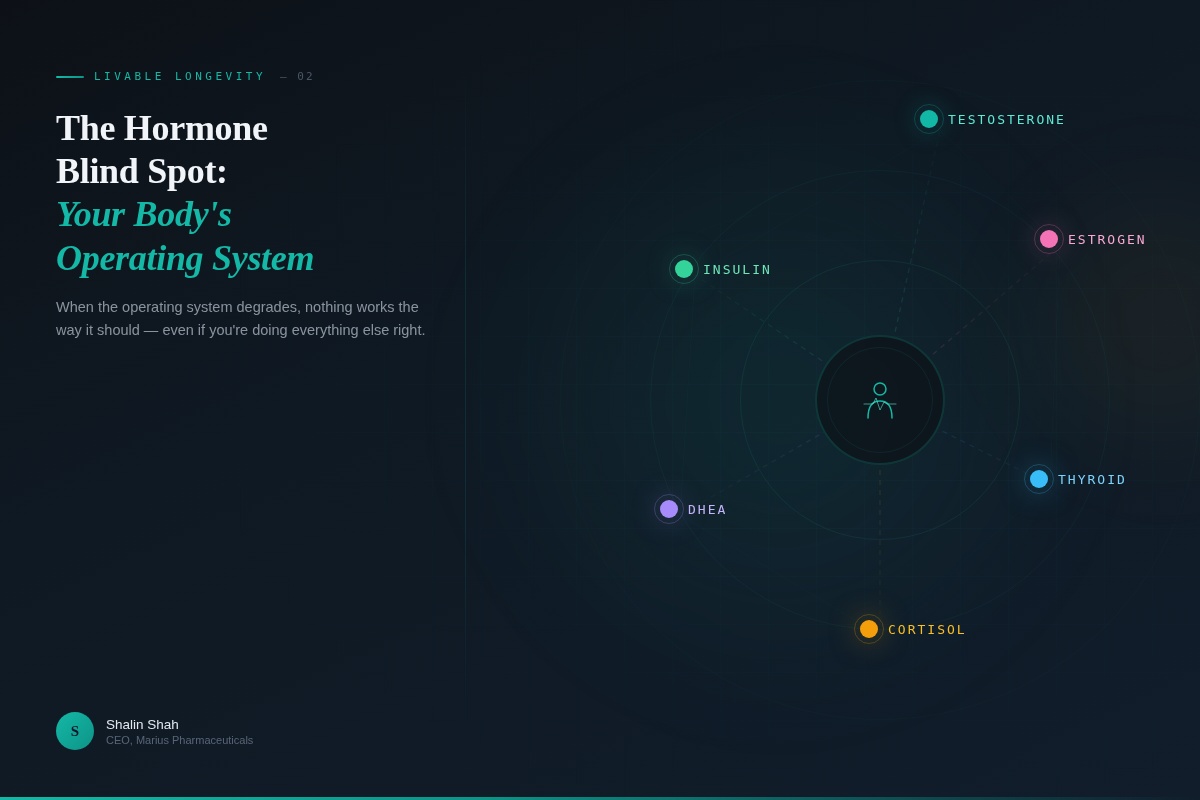

Dr. Samira Ummat says there are 8 key hormones to check especially during menopause. Sponsored by Longevity Medical.
SEATTLE — October marks Menopausal Awareness Month, a time to spotlight the physical and emotional changes women experience during this pivotal life stage. While traditional hormone therapy often focuses on just three hormones — estrogen, progesterone, and testosterone — that’s only part of the picture.
“Our bodies are a complex system,” said Dr. Samira Ummat of Longevity Medical Clinic. “Signals from the brain trigger end organs, which respond and give feedback. It’s a symphony of hormones — not just one, two, or three.”
Dr. Ummat emphasizes that hormones like DHEA, pregnenolone, and cortisol also play crucial roles in maintaining health and function.
Cholesterol is actually the backbone of this hormonal cascade. It breaks down into pregnenolone, which leads to DHEA, then testosterone, and eventually estrogen. Cortisol, the body’s stress hormone, also stems from this pathway.
“They’re all integrated,” Dr. Ummat said. “Some can go backwards, some can’t. Unless we fix the whole thing, we’re only doing part of the job.”
Several hormones that are often overlooked but essential for longevity and optimal function include:
- Testosterone: Vital for cognitive function, self-confidence, muscle mass, and bone health. It also reduces the risk of breast cancer. Surprisingly, women have more testosterone than estrogen — just less than men.
- DHEA: A precursor to testosterone, DHEA supports immune function and contributes to muscle mass and emotional resilience.
- Pregnenolone: Known as the “mother hormone,” it plays a key role in mood, memory, and cognitive skills.
Hormonal imbalance can manifest in many ways: hot flashes, night sweats, mood swings, sleep disturbances, low libido, bladder infections, thinning bones and even heart disease.
With the average age of menopause at 52, women have decades ahead where hormone optimization can dramatically improve quality of life.
At Longevity Medical Clinic, advanced lab testing is used to measure all eight hormones.
“We look at the ideal value for you,” Dr. Ummat said. “Then we get you to your ideal level.”
This personalized approach ensures that downstream hormones, those affected by others in the cascade, are also addressed.
Treating only a few hormones can leave the body out of sync. For example, giving estrogen without balancing progesterone, testosterone, DHEA and pregnenolone may reduce symptoms but won’t fully support memory, mood, or bone health.
To learn more or schedule a personalized hormone health analysis, visit Longevity Medical Clinic’s website.
Sponsored by Longevity Medical
Segment Producer Suzie Wiley. Watch New Day Northwest at 11 a.m. weekdays on KING 5 and streaming live on KING5.com. Contact New Day.
link



More Stories
What modern medicine gets wrong about body’s operating system
Choosing birth control? Weighing the risks and benefits
An indie brand’s approach to hormone-conscious skincare